Learning transfer: How to close the gap between learning & application
Why does so much workplace learning fail to change what people actually do? In this episode of Learning at Large, Melanie Martinelli, CEO & Owner of the Institute for Transfer Effectiveness, explores why attendance, satisfaction, and completion rates aren’t enough – and what really needs to change if learning is going to translate into performance.
Drawing on research, real-world examples, and human behavior, Melanie breaks down what truly drives learning transfer and shares practical ways L&D teams can stop ticking boxes and start creating real impact.
Watch the full podcast video
Top tips for designing learning that transfers
Don’t have time to listen now? Here’s a quick summary of what you’ll learn in this episode:
- Redefine the finish line for learning – Shift the signal from attendance to application
- Stop mistaking satisfaction for impact – Happy learners don’t guarantee transfer
- Design for real humans, not ideal ones – Energy and effort matter more than motivation alone
- Make relevance and practice non-negotiable – Work on real problems, not abstract scenarios
- Focus on the barriers that matter most – Diagnose before you design
1. Redefine the finish line for learning
Many organizations say learning transfer is important, but the way success is defined often sends a different message. When training is treated as something to attend rather than something to apply, learners quickly understand where expectations begin and end. Melanie argues that redefining the finish line is one of the simplest and most powerful ways L&D can influence behavior – shifting focus from completion to application without adding more content or complexity.
“I’ve never really met an organization that told me we don’t care about transfer. They all say it’s important, but then their actions show something else…Say goodbye to certificates of attendance and say hello to certificates of implementation.”
2. Stop mistaking satisfaction for impact
Satisfaction scores are easy to collect and comforting to report, but they tell us very little about whether learning is actually being used. Melanie highlights how long we’ve known that learner happiness doesn’t predict application – and why L&D still relies so heavily on it. In some cases, she explains, organizations avoid deeper evaluation altogether because it risks uncovering uncomfortable truths about effectiveness.
“We’ve actually known, I think the studies go back to 1969, that there’s a 0.01 correlation between satisfaction and transfer. And it’s puzzling to me that we’ve known this for so long, but still organizations measure it. One of the reasons is it’s just easy. We can control satisfaction to a certain extent.”
3. Design for real humans, not ideal ones
Motivation alone isn’t enough to drive learning transfer. Melanie introduces the concept of volition – the energy required to follow through – and explains why people often fail to apply learning even when they want to. Everyday decisions, distractions, and workload drain this energy, leaving little capacity for behavior change. Designing for transfer means recognizing this reality and reducing the effort required to apply learning in the flow of work.
“Volition is what allows us to stay on top of things, the energy to carry through…We don’t do what we wanted to do not because we are lazy, not because we don’t want to do it, just because our energy is sucked up.”
4. Make relevance and practice non-negotiable
Learning transfer is far more likely when people can work on challenges that matter to them right now. Rather than investing time in polished but artificial scenarios, Melanie encourages L&D teams to let learners bring their real work into the learning experience. This approach increases relevance, builds confidence, and creates immediate value – all critical conditions for application.
“Ensuring that the content we are putting in front of the people is relevant shouldn’t be rocket science. Just have learners bring their cases and have them work on their actual challenges in the course.”
5. Focus on the barriers that matter most
Not every learning initiative struggles for the same reasons. Melanie emphasizes that effective learning transfer starts with understanding what’s really getting in the way for a specific program, rather than applying generic solutions everywhere. Progress comes from diagnosing the most significant barrier first – and addressing that intentionally.
“That’s not going to be the same for every program. So, the first step towards transfer is to understand for a particular program what the biggest challenge is and then address that.”
About Melanie
Melanie is an expert in learning transfer and performance-driven learning design, helping organizations close the gap between learning and application. She is CEO & Owner of the Institute for Transfer Effectiveness, where she leads global work on improving training impact and designing learning for measurable performance outcomes. With extensive experience working with organizations across industries, Melanie combines learning science, practical design, and business insight to help L&D teams create learning that delivers real, sustained change.
Connect with Melanie on LinkedIn.
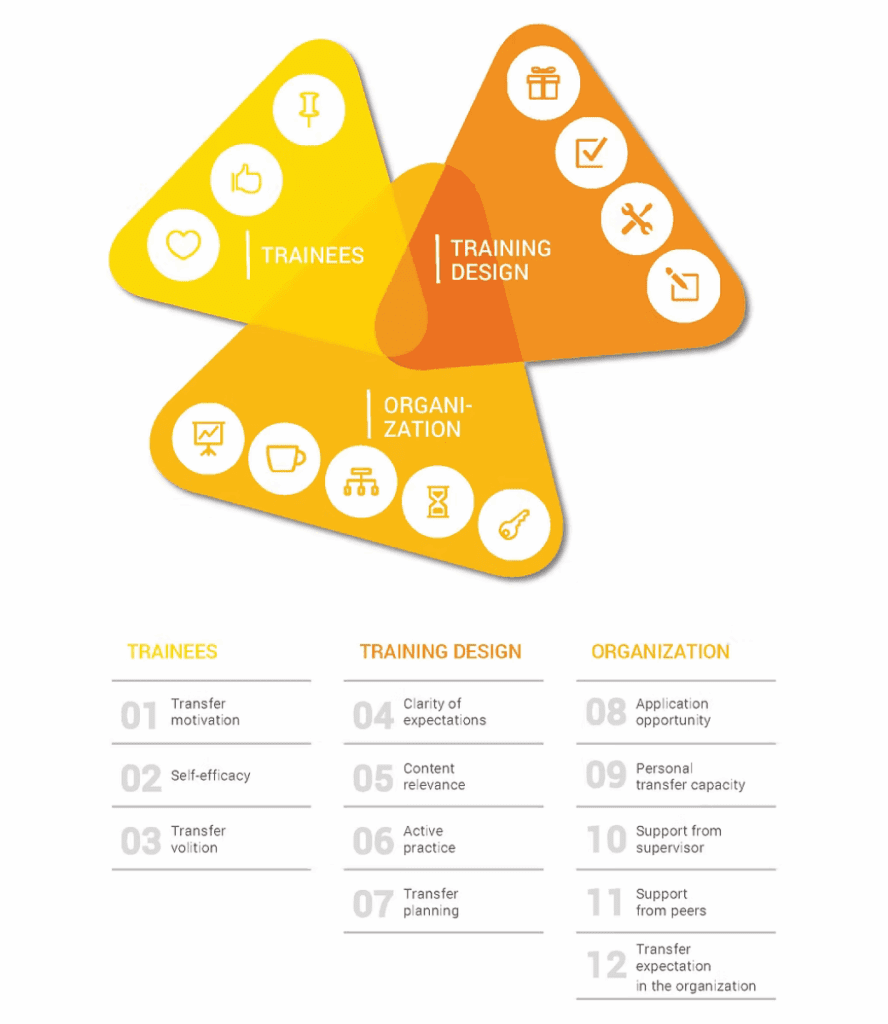
Learn more about the 12 Levers of Transfer Effectiveness.
Want more learning insights?
Stay ahead with the latest tips, expert learnings, and best practices from top learning managers and global leaders – delivered straight to your inbox. The Learning at Large newsletter brings you insider content each month to help you create, manage, and deliver engaging learning at scale.
Subscribe now and never miss an edition!
Enjoyed the podcast? Don’t forget to rate it in your favorite podcast app. Thanks for tuning in – we’ll see you next time!

Subscribe
Never miss an episode of the Learning at Large Podcast
Subscribe now